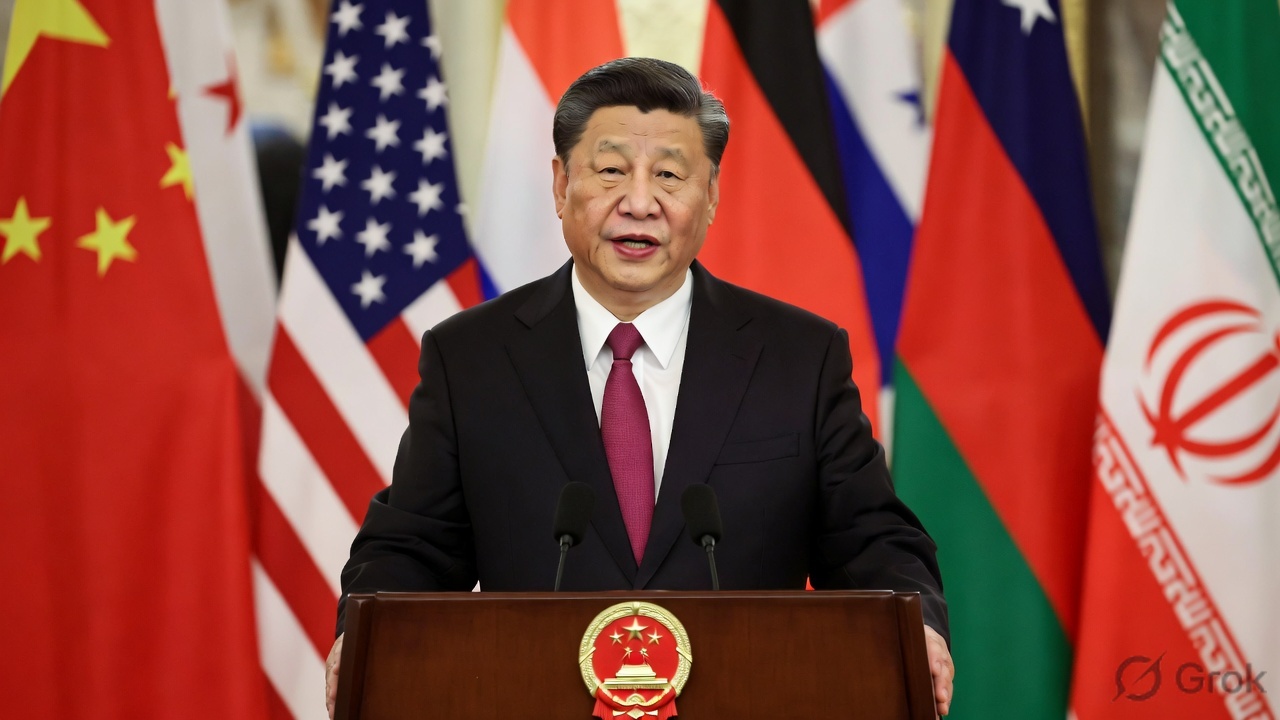
Beijing, 15 May 2026.
Xi Issues Sharp Taiwan Warning During Trump Summit
A high-stakes summit between President Donald Trump and Chinese President Xi Jinping entered its second day Wednesday with Xi delivering a blunt private warning: mishandling Taiwan could push the world’s two largest economies toward direct conflict. At the same time, both leaders made progress on the Iran nuclear crisis and a fragile trade truce.
The warning came during talks at Xi’s official residence, where final meetings are scheduled before Trump’s departure. Taiwan, Xi made clear, remains China’s ultimate red line. According to people familiar with the exchange, Xi told Trump that miscalculation or poor management of the issue could trigger clashes neither side actually wants. Analysts interpreted the message less as a direct threat and more as a demand for extreme caution at a time of growing geopolitical tension.
China and the U.S. Find Common Ground on Iran
On Iran, the two sides found more common ground. Both governments agreed that the Strait of Hormuz must remain open to international shipping – a shared economic priority given China’s dependence on Gulf energy flows and America’s interest in stabilizing oil markets after U.S. airstrikes on Iranian facilities earlier this year.
Beijing also offered to play a mediating role in future Iran nuclear negotiations and pledged not to provide Tehran with military assistance. If upheld, the commitment would mark a notable concession from China, considering Iran remains its largest energy trading partner and a key part of its opposition to Western sanctions. The bigger question is whether Beijing can genuinely influence Tehran or is simply buying time.
Tech Titans Join the Diplomatic Table
One of the most striking aspects of the summit has received surprisingly little attention: the technology executives traveling with Trump’s delegation. Elon Musk, Nvidia CEO Jensen Huang, and several major tech leaders joined the talks, signaling how deeply Silicon Valley’s future is tied to U.S.-China relations.
Nvidia’s ability to continue selling advanced chips into China remains a major issue inside Washington, and the presence of these executives points to the rise of what some analysts now call “AI diplomacy” – where technology, supply chains, and corporate influence increasingly shape foreign policy alongside traditional statecraft.
These executives were not merely symbolic guests. They participated in discussions involving soybean purchases, beef exports, semiconductor access, and Boeing aircraft deals, highlighting how closely business interests and geopolitical negotiations have become intertwined.
What the Summit Means for the Future
The summit concludes today, and its outcome could shape the next phase of one of the world’s most complicated relationships. A managed easing of trade tensions, a credible Chinese commitment on Iran, and clearer understanding over Taiwan would count as meaningful progress.
Failure on even one of those fronts could accelerate the economic, technological, and strategic decoupling both governments publicly claim they want to avoid.