Washington DC, 15 May 2026.
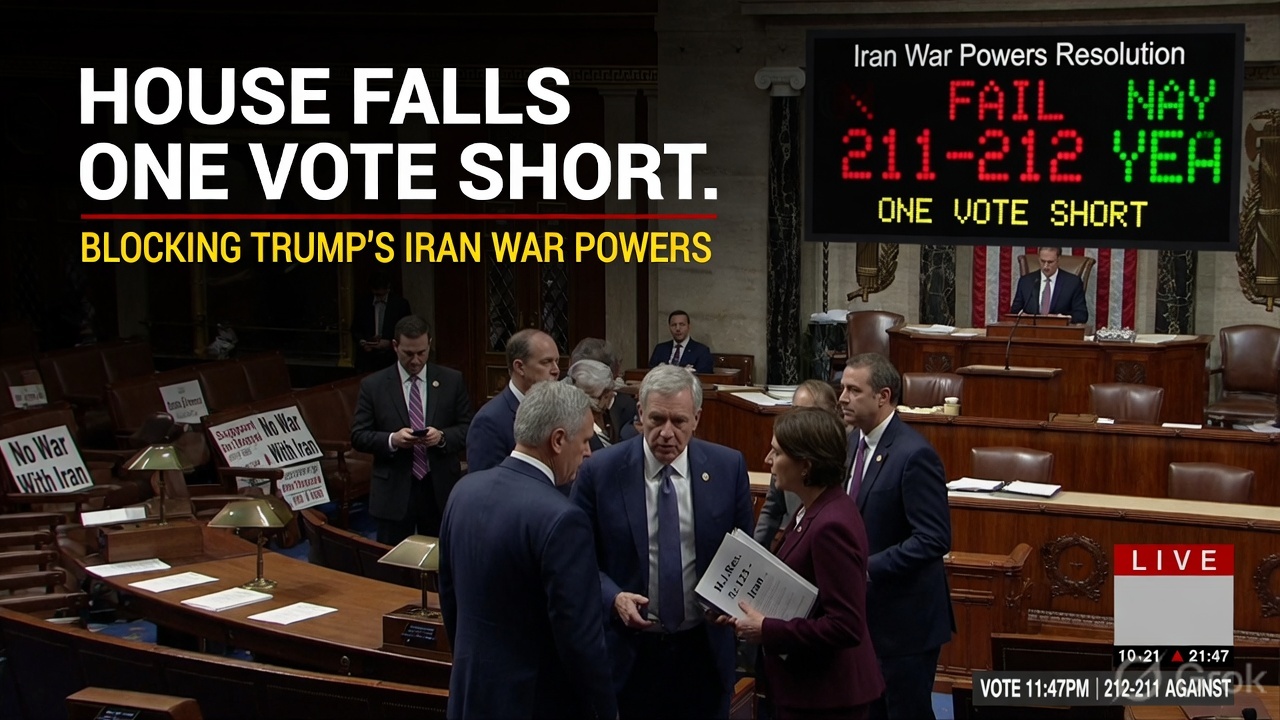
A House resolution seeking to force President Donald Trump to withdraw US forces from hostilities with Iran failed by a single vote this week, highlighting growing unease in Congress over a military campaign now entering its fourth month.
The measure, supported by 209 Democrats and three Republicans, narrowly missed the majority required for passage. While the vote leaves Mr Trump’s authority over the Iran operation legally intact, it also exposes increasing political pressure on the White House as concerns over executive war powers deepen on Capitol Hill.
The resolution followed months of debate over US airstrikes on Iranian targets that began on 28 February. The strikes were launched without a formal declaration of war and with limited consultation with Congress, reigniting long-running constitutional disputes over who has the authority to commit American forces to military conflict.
The Senate has already rejected similar measures several times in recent weeks, underscoring how divided lawmakers remain over the administration’s handling of the conflict.
Conflict Expands Beyond Initial Strikes
The failed vote comes as the regional situation grows more complicated. Iranian-linked groups continue to challenge US and allied operations across the Middle East, while fears of disruption in the Strait of Hormuz have kept global energy markets on edge.
At the same time, the conflict has become increasingly tied to Israeli military operations against Hezbollah positions in Lebanon — actions the United States has not formally criticised.
Analysts now describe the situation as an undeclared, multi-front conflict stretching across the region, with Congress struggling to either formally authorise or meaningfully restrict the administration’s military actions.
The War Powers Resolution, which formed the legal basis for this week’s vote, was created to limit prolonged military engagements without congressional approval. In practice, however, its effectiveness has often depended on political consensus that has proven difficult to sustain.
Divisions Emerging Inside Both Parties
The narrow margin also revealed divisions within both political parties, particularly among Democrats.
Pennsylvania Senator John Fetterman drew attention after opposing a similar effort in the Senate, breaking with many members of his party who have pushed for tighter limits on executive military authority.
His position reflects a broader divide among Democrats between lawmakers concerned about unchecked presidential war powers and others wary of appearing to restrict US military options during a volatile regional crisis.
That split could complicate future attempts to build a lasting bipartisan coalition capable of directly challenging the administration’s approach to Iran.
Political Pressure on White House Continues
Despite the resolution’s failure, the one-vote margin is likely to intensify political pressure on the administration.
Lawmakers on both sides acknowledge that even a small shift in support could alter the outcome of future votes if the conflict expands or American casualties rise.
The debate in Congress is unfolding alongside parallel diplomatic efforts overseas. During the Trump-Xi summit in Beijing this week, US and Chinese officials discussed possible pathways toward Iranian de-escalation, creating a striking contrast between ongoing military operations and simultaneous diplomatic negotiations.
For now, the White House retains broad operational freedom. But the narrow House vote suggests congressional opposition to the Iran campaign is growing stronger — and increasingly difficult for the administration to ignore.