
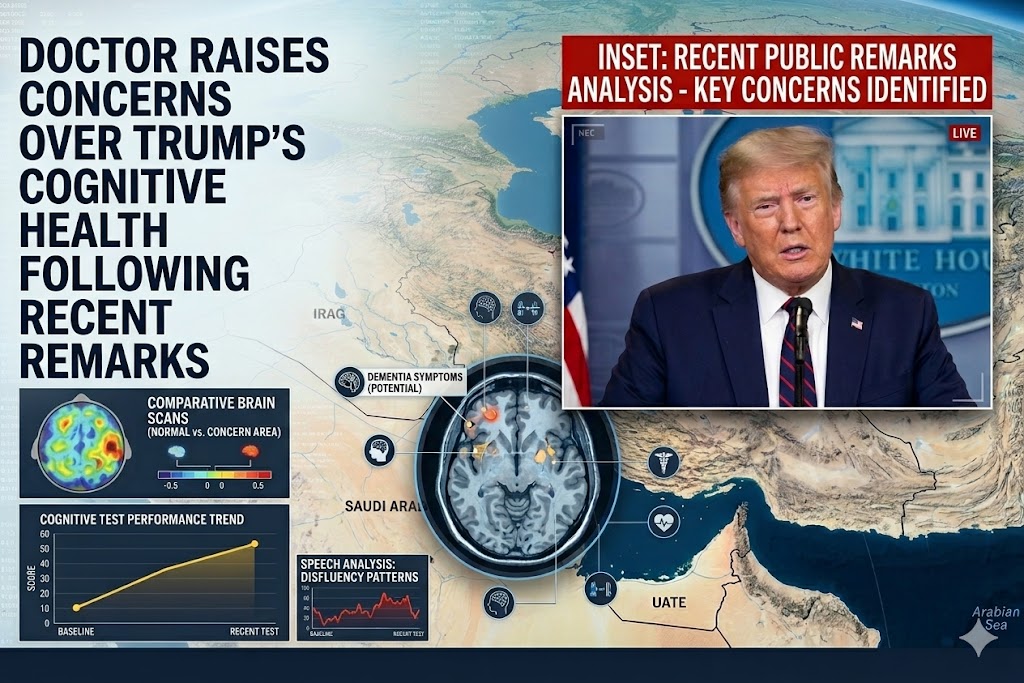
Washington, D.C., 7, April — A U.S. physician has expressed concern about the cognitive health of President Donald Trump, citing recent public statements and behavioral patterns as potential indicators of decline.
Vin Gupta, a medical analyst, said in a social media post that he has observed several concerning signs, including difficulty completing sentences, inconsistent thought patterns, and apparent confusion. He suggested these symptoms may indicate a gradual deterioration in cognitive function.
Gupta stated that such patterns, if persistent, could be consistent with neurological conditions that develop over time. He added that the observations are based on publicly available remarks and should be interpreted with caution.
Remarks Follow Controversial Statements
The concerns come after a series of statements by Trump related to the ongoing conflict involving Iran, including posts on his social media platform that drew widespread attention for their tone and content.
The president had been less visible in public appearances in the days leading up to the remarks, prompting speculation about his health. The White House, however, rejected suggestions of any medical issue, with officials stating that the president remains actively engaged in his duties.
Previous Concerns and Response
Gupta noted that he had previously raised similar concerns earlier this year, describing what he viewed as a pattern of cognitive changes. He emphasized the importance of proper medical evaluation, particularly given the responsibilities of the office.
White House representatives dismissed the claims, criticizing what they described as unfounded speculation and reiterating that the president continues to carry out his responsibilities.
Ongoing Debate
The episode has added to broader public discussion about the health and fitness of political leaders, particularly during periods of heightened geopolitical tension. Medical experts generally caution that definitive assessments require comprehensive clinical evaluation rather than observations based solely on public appearances.
As the situation develops, questions surrounding leadership, communication, and decision-making remain closely watched both domestically and internationally.