
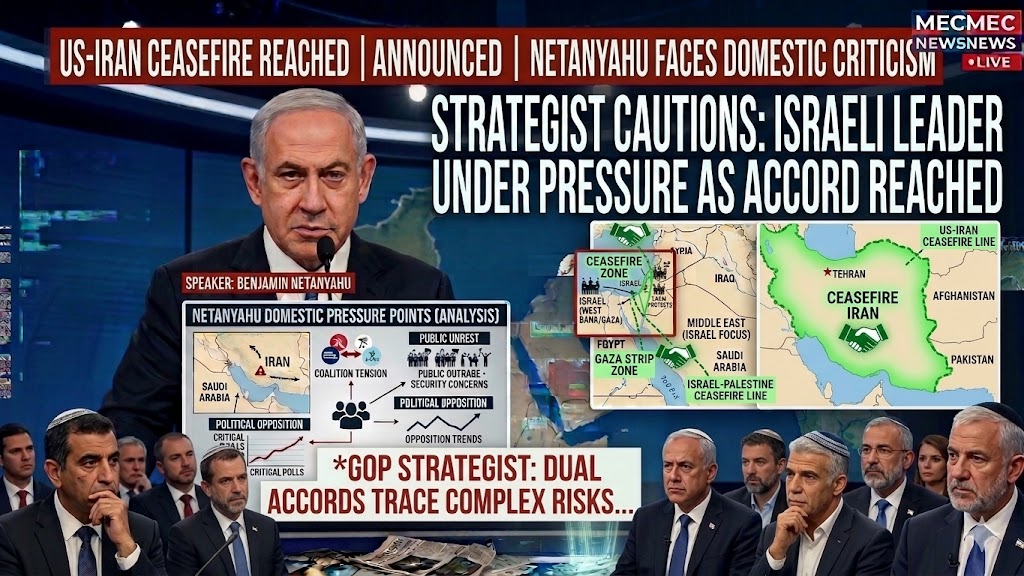
Jerusalem, 8 April — Israeli Prime Minister Benjamin Netanyahu is facing growing criticism at home following the announcement of a temporary ceasefire between the United States and Iran, with opposition leaders questioning Israel’s role in the decision-making process.
Opposition figure Yair Lapid described the development as a significant political setback, arguing that Israel was not sufficiently involved in discussions affecting its core security interests. In a statement on social media, Lapid said the situation highlighted gaps in strategic and diplomatic coordination.
Political and Strategic Concerns
Lapid acknowledged the performance of Israel’s military during the conflict, crediting it with achieving operational objectives, but criticized the government’s broader strategy. He argued that while military goals were met, diplomatic outcomes fell short, potentially leaving long-term consequences for national security.
The criticism reflects broader debate within Israel over how the government has navigated the conflict and its aftermath, particularly in relation to coordination with key allies.
Israel Backs Ceasefire With Conditions
Despite the criticism, Israel has formally supported Washington’s decision to pause hostilities for two weeks. Officials, however, emphasized that their backing is conditional.
The Israeli government said it expects Iran to reopen the Strait of Hormuz and halt attacks on Israel, the United States, and other regional actors. Authorities also clarified that the ceasefire does not apply to Israeli operations involving Lebanon.
Israel reiterated its position that Iran must not pose a threat through its nuclear or missile programs, adding that it remains aligned with U.S. objectives on these issues.
Diplomatic Efforts Continue
The ceasefire is intended to create space for negotiations aimed at reducing tensions in the region. Iranian officials have indicated that talks with the United States could begin in the coming days, with mediation efforts involving regional partners.
There have been differing accounts regarding the scope of the truce. While some mediators suggested it may extend to additional areas of conflict, Israeli officials have maintained that its application is limited.
Outlook
As diplomatic efforts continue, uncertainty remains over whether the ceasefire will hold and lead to a broader agreement. The situation highlights ongoing divisions among regional and international stakeholders, as well as the challenges of balancing military, political, and diplomatic priorities.