
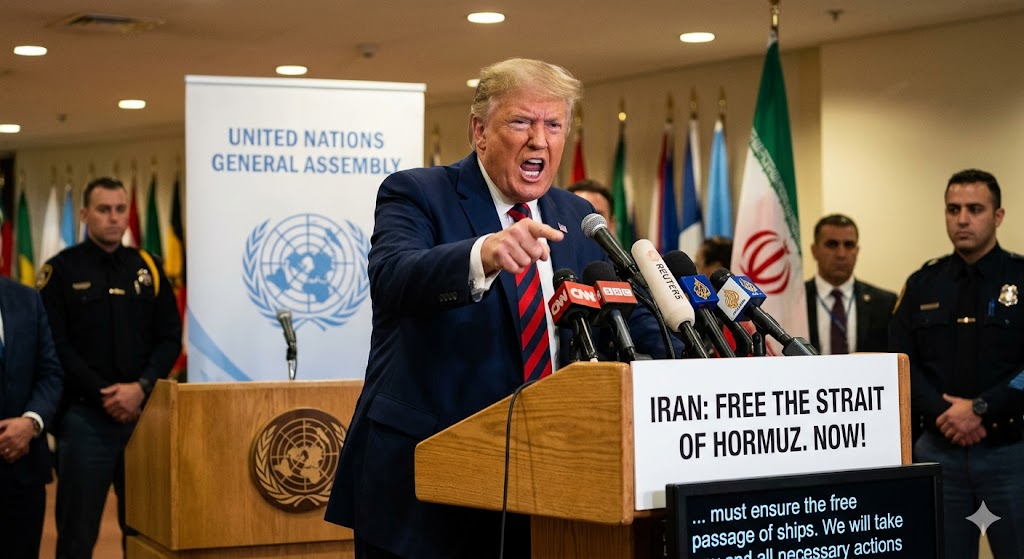
Washington, D.C., 7th April — U.S. President Donald Trump issued a series of stark warnings regarding Iran on Tuesday, raising concerns about a potential escalation in the ongoing conflict tied to the closure of the Strait of Hormuz.
In a post on his platform, Truth Social, Trump described the situation as a pivotal moment in global history and warned of severe consequences if current tensions are not resolved. He suggested that the hours ahead could prove critical, while also expressing hope that political change within Iran might lead to a more favorable outcome.
The remarks come ahead of a deadline set by the U.S. administration for Iran to reopen the Strait of Hormuz, a vital maritime route through which roughly one-fifth of the world’s oil supply passes. Iran effectively halted traffic through the strait earlier this year following joint U.S.-Israeli military operations.
Washington has indicated that reopening the waterway remains a top priority and has linked it to potential de-escalation. Officials have warned that continued closure could lead to further military action.
U.S. defense planners are reportedly reviewing potential targets, including infrastructure linked to energy distribution, although officials have emphasized efforts to focus on military objectives. Strikes carried out overnight targeted facilities on Kharg Island, including radar systems, bunkers, and ammunition storage sites, according to U.S. officials.
Vice President JD Vance said the operations were consistent with current strategy, which prioritizes military targets while avoiding critical civilian infrastructure. He added that diplomatic channels remain open, with ongoing discussions between U.S. and Iranian representatives described as being conducted in “good faith.”
Despite these efforts, tensions remain high. Trump has criticized allies, including members of NATO, for what he described as insufficient support in efforts to secure the reopening of the strait.
The crisis has had immediate global economic implications, with oil prices rising sharply following disruptions to supply routes. In the United States, higher fuel costs have added pressure domestically, particularly ahead of upcoming elections.
While maintaining a hardline stance, Trump has continued to signal both the possibility of further military action and the potential for diplomatic resolution, underscoring the uncertainty surrounding the next phase of the conflict.