Washington DC, 15 May 2026.
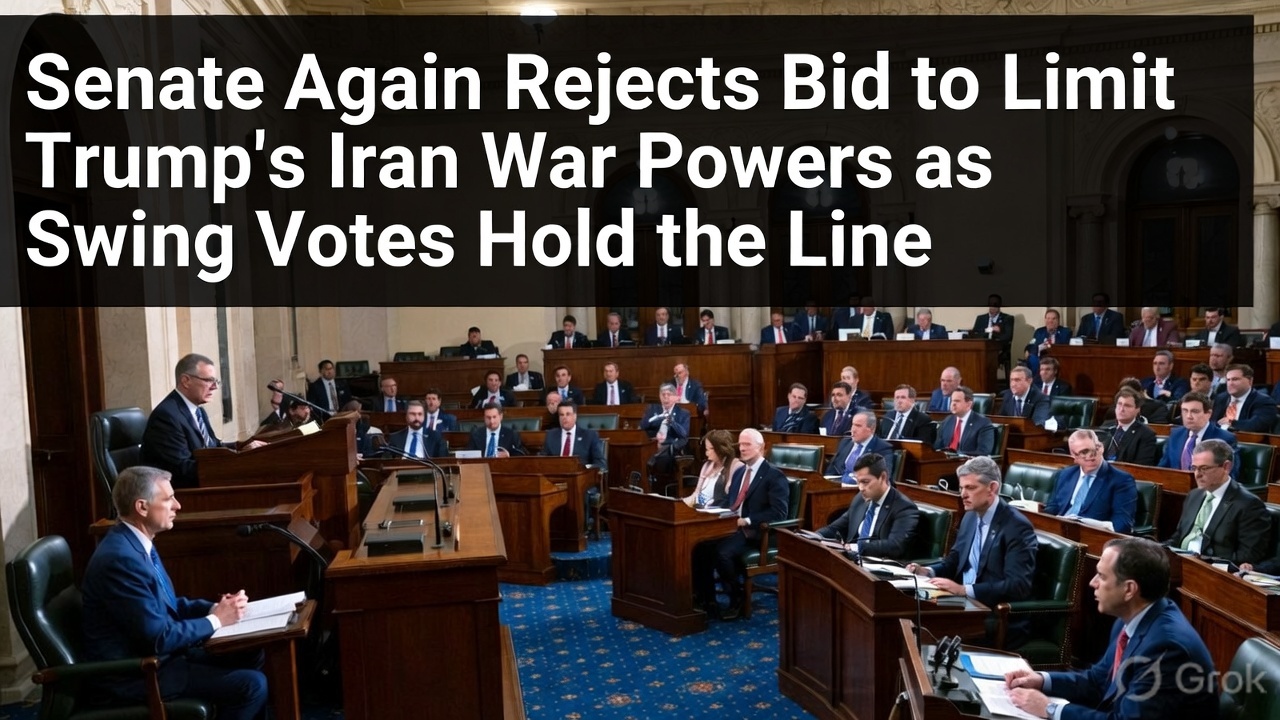
The US Senate rejected a War Powers Resolution challenging President Donald Trump’s military campaign against Iran for the seventh time this year on Thursday, underscoring how a small group of moderate lawmakers continues to shape America’s response to the conflict.
The vote came more than two months after US airstrikes on Iranian targets began on 28 February without formal congressional authorisation. Once again, the resolution drew enough support to signal growing unease in Congress — but not enough to force a change in policy.
While attention in Washington was also focused on the federal trial of entertainment executive Sean Combs in New York, the Senate vote highlighted a deeper constitutional debate over who controls the power to wage war.
Narrow Margins Keep Iran Campaign Alive
The failed resolution followed a familiar pattern seen in six previous votes this year: broad Democratic backing, limited Republican crossover support and a final result that preserved the administration’s operational authority.
The coalition opposing the military campaign has remained politically consistent but numerically short of the votes needed to challenge the White House effectively.
Analysts say the repeated narrow defeats reveal just how much influence a handful of centrist senators now hold over US foreign policy.
A shift of only two or three votes could have created a major constitutional confrontation between Congress and the executive branch over war powers and military authority.
Moderate Senators Become Key Decision-Makers
Particular attention has focused on Pennsylvania Democrat John Fetterman, whose repeated opposition to the resolutions has drawn scrutiny from both progressives and anti-war groups.
His votes have become symbolic of a wider divide inside Congress between lawmakers concerned about unchecked presidential military powers and those reluctant to restrict US operations during an escalating Middle East conflict.
Political analysts note that the senators effectively deciding the outcome of these votes are often not the country’s most prominent political figures. Yet their decisions are determining whether the United States remains engaged in an undeclared military conflict with Iran.
Their calculations are shaped by a mix of foreign policy beliefs, electoral pressures and concerns about national security messaging.
War Powers Debate Struggles to Hold Public Attention
The Senate vote also highlighted a broader challenge facing congressional oversight efforts.
While high-profile criminal trials and celebrity-driven news stories continue to dominate national headlines for weeks at a time, major congressional votes tied to military action often fade from public attention within hours.
Critics argue that this imbalance weakens political pressure on lawmakers and reduces public scrutiny over decisions involving the use of military force.
The War Powers Resolution was designed to give Congress a stronger role in restraining prolonged military engagements without formal approval. But repeated failed votes have raised questions about whether the law still carries meaningful political force in modern conflicts.
For now, the Trump administration retains broad authority over the Iran campaign. But the increasingly narrow margins inside Congress suggest the political debate surrounding the conflict is far from settled.